¡free shipping on all orders in london! -limited stock availAble
T I N T I C O F F E E C O L O M B I A
From the Andes to your morning cup
A journey through the mountains, the hands, and the craft behind every bag of Colombian specialty coffee.
"Not all coffee is equal. Colombian specialty coffee earns its name through altitude, care, and generations of knowledge — none of which can be faked."
T I N T I C O F F E E C O L O M B I A

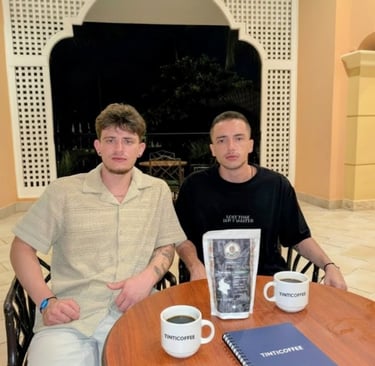


The Origin Advantage
Why Colombia Produces Different Coffee
Colombia's coffee-growing regions sit along the Andes mountain range, between 1,200 and 2,100 metres above sea level. This altitude slows the ripening of the coffee cherry, allowing sugars and complex flavours to develop over a longer period.
In Antioquia, the micro-climate of the mountains creates the perfect balance of sun, cloud cover, and rainfall. It is not an accident — it is geography working in our favour.
The result is a bean of exceptional density, clarity, and taste — what the industry calls specialty grade.
2.100m
Max growing altitude — where beans ripen slowest and best
3rd
Largest coffee producer in the world
100%
Arabica — the premium species, hand-selected
2x
Arabica — the premium species, hand-selected with two harvests per year
How a Coffee Cherry Becomes a Specialty Bean
The Farm Process


Seeds from the best mother plants are germinated in shaded nurseries for 6–8 months. Farmers select the Castillo variety — a Colombian-developed cultivar prized for its disease resistance and clean cup profile.
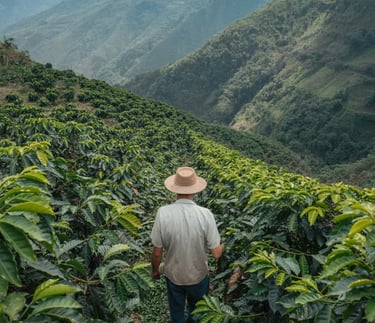
Young plants grow on steep hillside plots at 1,500–2,100m under shade trees. No industrial machinery — only mountain terrain and human hands. A tree takes 3–4 years to produce its first full harvest.
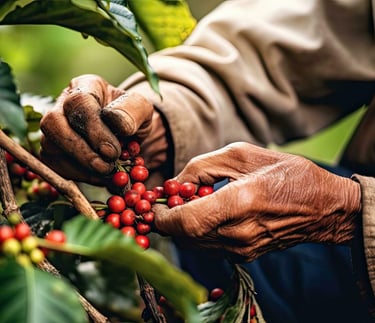
Unlike mechanized farms that strip entire branches, Colombian pickers select only perfectly ripe red cherries, returning to the same tree multiple times across weeks. This single practice is the foundation of specialty quality.
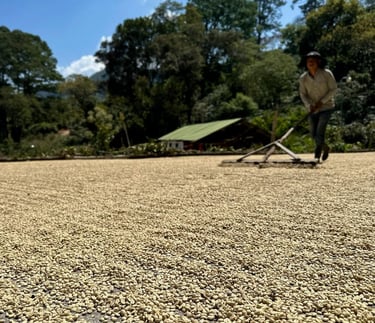
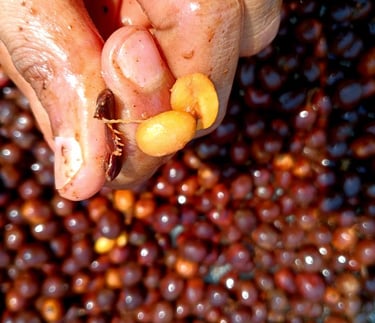
Cherries are pulped the same day of harvest, fermented in water tanks for 24–36 hours to dissolve the fruit layer, then rinsed. This delivers the clean, bright cup profile Colombian coffee is famous for.
Washed beans are spread on elevated African drying beds and turned by hand every few hours. Drying takes 10–20 days. Rushing this step destroys the quality built up over years of cultivation.
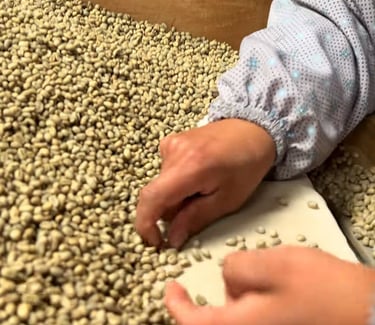
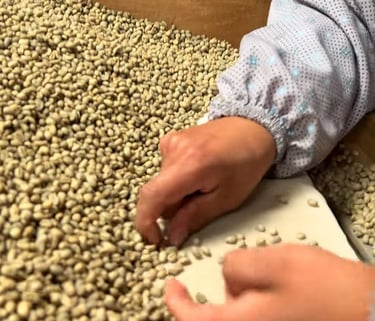
Beans are sorted by size, weight, and colour. Defective beans are removed. Only beans scoring 80+ on the SCA scale pass. This is where Tinticoffee's standard is enforced — no compromises.
1st
2nd
3rd
4th
5th
6th
7th


8th
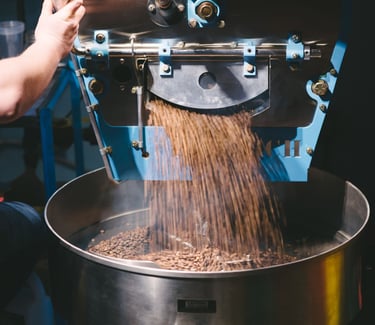
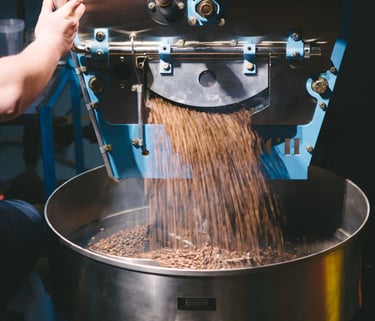
Beans are roasted in small drum batches to a medium roast — preserving Antioquia's characteristic caramel, vanilla, and cocoa notes. Each batch is cupped (tasted professionally) before approval.
Within 48 hours of roasting, beans are sealed in valve-equipped bags that release CO₂ while keeping oxygen out. Each 250g bag includes the farm, altitude, variety, and process — full traceability, no exceptions..
Understanding Specialty Coffee
What the Label Means